








Building School Readiness at Home: 7 Activities for Parents
Posted May 23rd 2025

Building school readiness in your child is the first step in ensuring that they are confident and prepared to go to primary school. There are many ways to prepare your child for their schooling journey at home. Read on to see what school readiness means for you (hint: it looks different for every child!), and how you can support your child at the start of their primary education.
School readiness isn’t one-size-fits-all. Being emotionally, physically, cognitively and socially ready for school will be different for every child. In essence, school readiness means children are ready for school, families are ready to support their children's learning, and schools are ready for children.
When assessing school readiness, parents and caregivers must consider many different developmental achievements and skills. This can include, but is not limited to:

In Australia, children generally start their primary education when they are five years old and turn 6 in the year that they are starting their schooling. All children in Australia must be enrolled in school by the time they turn six years old. Children can start earlier or later than this, depending on when their parents feel as if they are ready. These ages also differ between states, and some states have different names for the first year of primary school.
In Victoria, the first year of school is called Prep, short for “preparatory year”. Your child can start school when they are four years old, as long as they turn 5 by April of that year.
For children in Western Australia, the first year of primary school is called Pre-primary. To enrol in Pre-primary, your child must turn five by June 30 that year. In WA, your child can also be enrolled part-time in a preliminary year called ‘Kindergarten’, which is available, but not compulsory, for four-year-olds. To be eligible to enrol in a Kindergarten class, WA kids must turn four before 30 June that year.
School readiness is supported in most, if not all, early education and learning centres. Early education supports building school readiness by fostering children's social, emotional, cognitive, and physical development through play-based learning, structured routines, and positive relationships. Educators help children build confidence, independence, and foundational skills in literacy, numeracy, and self-regulation, whilst also encouraging curiosity and a love for learning.
By partnering with families and offering tailored transition programs, early learning centres ensure each child is equipped to thrive as they begin their formal schooling journey.

A child’s school readiness starts in early education and continues at home. Supporting your child’s interests, skills and milestones at home in the lead-up to primary schooling is important as it reinforces what they learn throughout their early education and care.
There are many ways in which you can support your child as they step towards Prep. Find seven fun, and easy, ways in which you can prepare your child for primary school below.
Cooking and baking are fantastic for building school readiness at home. This is because they naturally support early learning in a fun, hands-on way. Measuring ingredients introduces basic math concepts like counting, volume, and fractions, while following a recipe builds early literacy, listening, and sequencing skills. Children also develop fine motor control through stirring, pouring, and kneading, which helps prepare them for writing. Additionally, cooking encourages patience, cooperation, and the ability to follow instructions, key social and self-regulation skills needed for a successful start at school.
Puzzles and games are a fun way to get your little one to learn, even though it doesn’t feel like it! You can use any favourite educational board or card games on hand to help your child prepare for school. Check out two fun brain games to get your little one ready for school below!
Alphabet Scavenger Hunt
This game focuses on building up letter recognition, vocabulary, attention and memory.
How to Play:
This game is great as it encourages letter recognition in a fun, active way. It also supports early phonics and memory skills, and builds independence and confidence as the child finds each letter.
Roll and Count Colour Sorting Game
With a focus on numeracy skills, this fun game promotes fine motor skills, colour recognition and taking turns.
How to Play:
We love this game because it builds counting skills alongside corresponding colours with numbers. It also develops fine motor skills by using the tongs or fingers, and supports following directions and turn-taking.

Parents know that reading is a fantastic way to help their children’s literacy and language skills in the lead up to school, but there are plenty of great books covering the topic of starting school that may help put your little one’s mind at ease.
Some of Aspire’s favourites include:
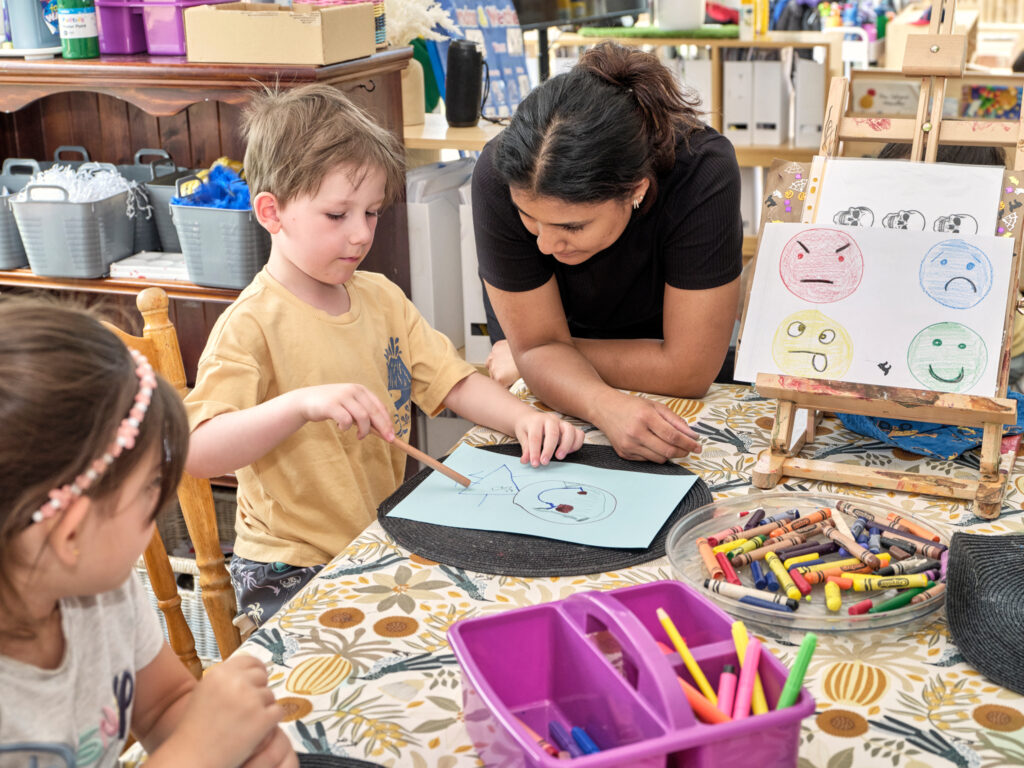
Arts and crafts activities can significantly contribute to a child's school readiness by enhancing fine motor skills, hand-eye coordination, and creativity. They also foster problem-solving, critical thinking, and focus, all of which are beneficial for academic success.
Some arts and crafts skills that are especially important to develop before starting school include using scissors, peeling stickers off their paper backing, gluing and sticking, folding paper, or using a pencil, crayon or marker to draw.
Allowing your child to be creative can also improve their self-confidence and help them discover a love of art.
Play dates with friends are a fantastic way to prepare your child socially for school. They not only let your child communicate and play with children their age but also help them build self-confidence. It teaches children learn how to make friends, reason and compromise with others, and share.
Play dates are especially good for only children or children without similarly aged family members, to interact with other kids.
Role-playing going to school can be a great way for your child to get used to the rhythm and routine of a school day. Get them to dress up in their school uniform (or something similar if it isn’t available), pack their lunchbox and bag, and drive or walk to school! This is a great opportunity to play in the school playground or walk around the campus to help your child familiarise themselves with the school’s layout.
You can also play pretend school at home. Set up a whiteboard or blackboard, get out some toys as pretend pupils, and either you or your child can play as the teacher. Bonus points if you have other children to pretend to be students!

Singing a song or a rhyme can be a good way to get your child excited for school. Whilst there are no traditional nursery rhymes or songs about going to school, making up silly songs to tunes your child knows can inject a bit of fun into the morning routine. The BBC’s Tiny Happy People campaign has a great rhyme about getting ready for school, sung to the tune of “Here We Go Round the Mulberry Bush”, as follows:
We are getting ready for school,
Ready for school, ready for school,
We are getting ready for school,
I've washed my face.
We are getting ready for school,
Ready for school, ready for school,
We are getting ready for school,
I'm brushing my teeth.
You can get your child used to getting ready for school in the mornings by singing this rhyme every morning as you get ready for the day ahead, adding in the things you are doing as you go along. Then, once they are starting school, you can continue singing it each day until your child is comfortable and no longer needs the musical reminder.
As a parent, it can be hard to decide when to start your child’s primary school journey. “Should I hold them back a year?”, “They can read well, should I start them early?”. In fact, a study run by the School of Early Childhood at Queensland University of Technology found that parents around the country struggle with deciding when the right time is.
Some signs that your child may be ready for school include the following:
My child can…
It can also be beneficial to have an educational and developmental psychologist assess your child if you are unsure about their readiness for school. They can also suggest additional ways for building school readiness at home.
Remember, each child will reach these milestones at a different pace, so be patient and work with your child to help them be ready for school. The goal is to make learning fun and meaningful, so everyday activities like cooking, playing, or reading together can all support your child’s development in simple, powerful ways.
Aspire Early Education & Kindergarten centres have robust school readiness programs throughout both the Three and Four-Year-Old Kinder curricula.

The design of Aspire's Three-Year-Old Kindergarten program fosters the social and emotional skills necessary for the transition into four-year-old Kindergarten. The Four-Year-Old Kindergarten program helps children feel a sense of belonging in the classroom and focuses on activities that promote numeracy and literacy skill development. This ensures that each child is ready for their transition into primary school and beyond.
In term four, the Four-Year-Old Kindergarten children start to bring their lunches from home during Aspire’s Lunchbox Program. Families are asked to bring their snacks and lunches from home to help their children get used to the routine of school. It can benefit families by getting into the habit of preparing their child’s lunch, too! Children spend time opening up their lunchbox, and eating together.
At Aspire, children frequently visit their local primary schools. This helps them get acquainted with their surroundings and familiar with some of the teachers at the school. It is also a fun time for them to play on the playground and read books in the school library. Aspire Wollert has a strong connection to its local school, Harvest Home Primary School, and visits frequently. During these excursions, they walk to the school, play on the playground, listen to a story in the library, and engage in “schoolwork” inspired by the story. Their exemplary behaviour and engagement during these visits showcase their readiness for the next step in their education.

More information about Aspire’s School Readiness Programs in both the Three and Four-Year-Old Kindergarten curricula can be found on the Education page here.
Preparing your child for school doesn’t have to be overwhelming; it can be a joyful and engaging experience for the whole family. By incorporating simple, play-based activities into your everyday routines, you’re supporting your child’s development and building their confidence, independence, and excitement for the journey ahead. With your encouragement and support, your child will be well on their way to a happy and successful start to school life.
If you liked this article, we also have a range of other resources that provide education and tips for parents. Check out some of them below: