








Indoor Activities for Toddlers at Home
Posted July 17th 2023
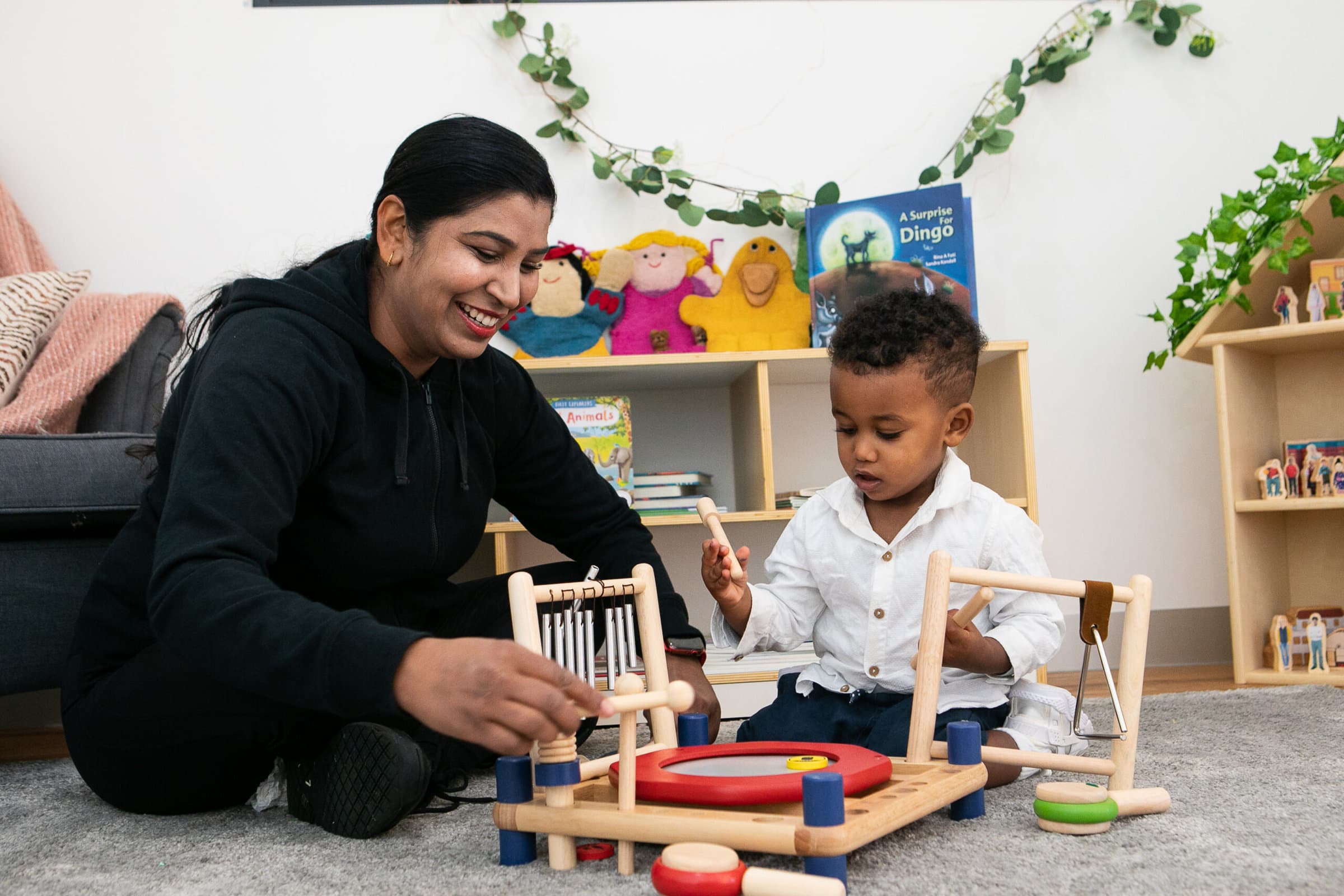
Toddlers are curious learners who absorb the world around them every day. During this important stage, your child develops key social, emotional, communication, behaviour, and thinking skills through play and interactions with adults. While genetics, nutrition, health, and community all influence development, the experiences toddlers have at home are especially vital.
Children’s brains will develop faster in their first five years of life than at any other stage in their lives, making it essential to provide a nurturing and stimulating home environment filled with opportunities to explore and learn
During the toddler years, children learn best through relationships and play. Play-based learning is essential for your child’s cognitive development, helping them build skills in thinking, understanding, and communicating. Through play-based learning, toddlers explore the world by experimenting, creating, and discovering new things. Sharing playtime with your child not only strengthens your bond but also provides a safe and supportive space for them to grow and learn. To support this important stage, parents can try a variety of engaging activities at home such as reading together, creative games, baking and cooking, and sensory play — all designed to nurture your toddler’s development in fun and meaningful ways.
Reading to your toddler is one of the most valuable activities to enhance language development, vocabulary growth, and early literacy skills. Through storytelling, your child’s imagination is sparked, and they begin to understand more about the world around them. Encouraging daily reading routines helps toddlers become familiar with sounds, rhythms, and the patterns of language, laying a strong foundation for future learning.
To make reading time even more engaging and effective, try asking your child to name objects or characters in the pictures. This not only builds vocabulary but also encourages observation and verbal expression. Use different voices for characters, add sound effects, and pause to ask open ended questions like “What do you think will happen next?” or “How is this character feeling?” These techniques promote critical thinking and comprehension.
Introducing a variety of books including stories about different cultures, communities, and experiences broadens your child’s understanding of the world and helps foster empathy and curiosity. Picture books, interactive books with flaps or textures, and simple rhyming books are all excellent choices for toddlers.
Remember, reading with your child is not just about finishing a story but about sharing a moment of connection and discovery. Let your child lead at times, follow their interests, and celebrate their attempts to read or retell parts of the story. Over time, these positive reading experiences will nurture a lifelong love of books and learning.

Recent research has highlighted the powerful role that imaginative play, such as playing with dolls or other toys, has in supporting children’s social and emotional development. When toddlers engage in pretend play, they build important social skills like sharing, cooperation, and taking turns. They also develop empathy by exploring different perspectives and emotions, which helps them understand how others might feel in various situations. This kind of play encourages children to express their own feelings and to recognise and talk about the thoughts and emotions of others.
Encouraging imaginary games and creativity in early childhood is essential. Whether your child is playing with dolls, soft toys, sock puppets, or creating imaginary friends, these activities provide a safe space to experiment with social roles and storytelling. Through imaginative scenarios, toddlers learn to navigate social interactions, develop problem-solving skills, and build confidence in communicating their ideas. Creative play also fosters language development as children narrate stories and engage in dialogues during their pretend scenarios.
By supporting and joining in your child’s creative games, you help deepen their understanding of relationships and emotions while nurturing their imagination. This kind of play is not only enjoyable but also foundational for healthy social and emotional growth, setting the stage for positive interactions as they grow.

Baking and cooking benefit early childhood development and are a fun and meaningful way to spend quality time indoors. Simple, hands-on tasks like pouring ingredients, mixing batter, kneading dough, and decorating treats help strengthen fine motor skills such as hand-eye coordination and dexterity. These activities also introduce early maths concepts like measuring, counting, and understanding quantities, laying a foundation for numeracy in a natural and enjoyable way.
Involving your child in the kitchen boosts their confidence and independence as they follow simple instructions and see the results of their efforts. Try baking easy recipes such as muffins, decorating cupcakes, or assembling mini pizzas, all of which allow your toddler to be creative and involved at their own pace. Cooking together also opens up opportunities for conversation, from naming ingredients and describing textures to talking about colours and tastes, enriching your child’s language development.
Beyond the skills gained, baking and cooking provide a relaxed, playful setting for your child to explore new foods and develop a positive relationship with eating. When toddlers help prepare meals or snacks, they are often more willing to try and enjoy different flavours and textures. This shared activity not only nourishes the body but also strengthens your bond as you create lasting memories together.

There are many indoor activities your toddler can enjoy in winter to keep them engaged, curious, and learning. One powerful way toddlers learn is through sensory play, which involves activities that stimulate their senses of touch, smell, taste, hearing, and sight.
Sensory play encourages children to explore the world around them, helping to build important skills such as problem solving, language development, and fine motor coordination. It also supports emotional regulation as children engage with textures, colours, and sounds in a hands-on, playful way. Sensory experiences create meaningful learning opportunities by connecting your child’s senses with their curiosity and creativity.
Try placing textured items such as beans, pasta, pipe cleaners, or cotton on cut out numbers or letters to allow your child to feel the outline of each shape.
You can make sensory bags at home by placing items in a zip lock bag with some liquid or shaving cream. Sensory bags allow your child to feel and move the items around to learn how they can direct different objects.
Sensory bins can be made easily by placing rice in a bowl or small bin. Allow your toddler to try scooping and sifting the rice through their hands and shovels. You can even place some toys in the rice for them to find.

Allow your child to explore by moulding clay or Playdough. This type of play allows children to problem solve when trying to shape the clay into items they recognise.

Labelling everyday objects around the house is a simple sensory activity that helps toddlers connect written words with spoken language. By seeing and touching labelled items like "door," "chair," or "cup," your child builds early literacy and language recognition through daily interactions.
Each child is unique and will benefit from different activities. Don’t be afraid to try a variety of games and activities to find which ones work best for your child.
If you liked this, we also have a range of other resources that provide education and tips for parents. Check out some of them below:
To learn more about Aspire Early Education & Kindergarten, enquire now at your nearest Aspire centre!