








The Benefits of Storytelling in Early Childhood
Posted January 23rd 2025

Storytelling is one of the oldest forms of communication and teaching. It goes beyond just simply reading words on a page but is a powerful tool to convey a story or message in an impactful and engaging way.
In early education, storytelling plays a vital role by promoting creativity, enhancing language development, and building emotional intelligence in young children. Through stories, children are introduced to new vocabulary, different perspectives, and important life lessons.
Storytelling is the art of conveying events, ideas, emotions, or experiences through narrative. It involves the use of words, images, sounds, or even movement to engage an audience and share a story. The key elements of storytelling typically include characters, a plot, conflict, and a resolution, though some forms may focus on different emotions or themes, rather than a structured plot.
The purpose of storytelling can be used for both entertainment and educational purposes. It can be used to create a fun experience for the audience, as well as for educational means, through providing knowledge and making learning more relatable. These two functions can blend seamlessly, and stories can be either real (based on factual events) or fictional (created from imagination).
Storytelling can be expressed through many different types of media including written, spoken, visual, audio or performance based. Examples of this media include books, short stories, blogs, film and television, podcasts, audiobooks, photography and art, theatre and more. The medium chosen often depends on the type of story being told and the intended audience.
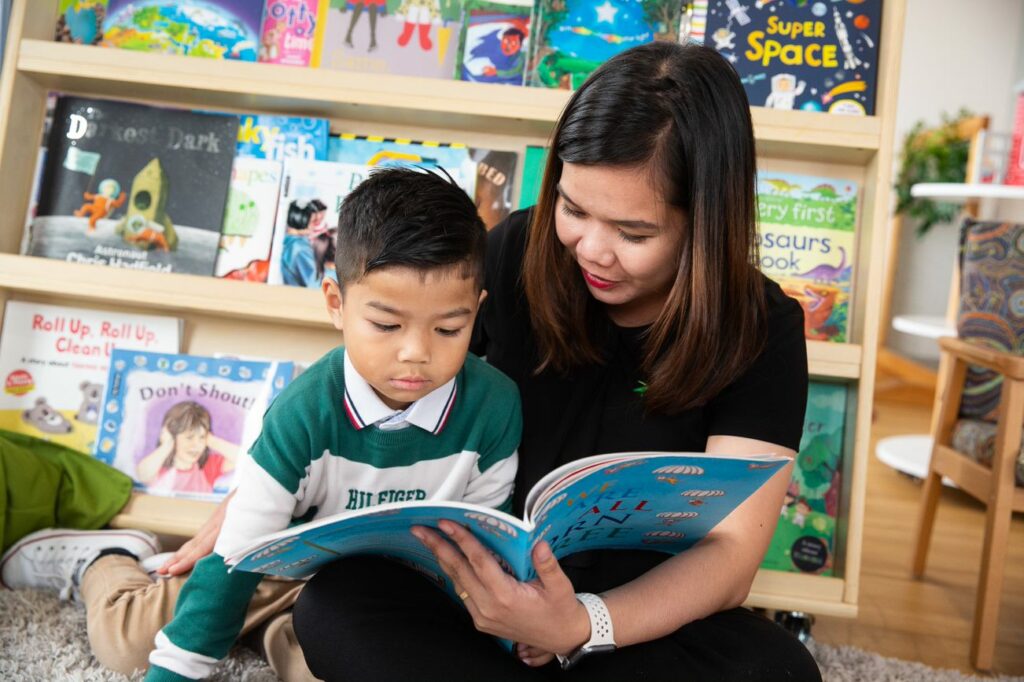
There are many benefits of storytelling for children, that support their growth and development from an early age.
Storytelling is the perfect opportunity for children to learn new words, phrases, and sentence structures. A study in the Early Childhood Education Journal examined the effects of storytelling on a young child’s oral language skills and story comprehension, and found that it had a positive effect on language development.
Hearing stories regularly can introduce children to new vocabulary and improve their understanding of language. Listening to stories also improves their listening abilities and phonemic awareness, which are basic concepts of reading and writing.
Through storytelling, children learn to use their imagination to visualise events and characters in a story as it unfolds. This imaginative process is essential for creative thinking, as it encourages children to generate ideas and solutions on their own. This helps develop their problem-solving skills, enhancing cognitive development.
The structure of stories, having a beginning, middle and end, can make key events and characters more memorable. Children learn to link certain events into a sequence, improving their memory skills. Emotional engagement with the story further improves recall, as emotional connections make experiences more meaningful and easier to retain. This has a positive impact on a child’s overall cognitive development.
Stories, even ones for children, often involve characters facing challenges, making choices, and experiencing differences emotions. This offers children the opportunity to empathise with these fictional characters and share another person’s perspective. This helps nurture their emotional intelligence, enabling them to navigate their own feelings from a young age.
A recent systematic review also examined the effects storytelling has on building resilience in children, and found that it had a positive impact. Stories enable children to explore different viewpoints and navigate the different challenges presented, which helps boost their resilience.
Stories frequently portray characters facing challenges, that requires them to overcome obstacles or solve problems. By engaging with these stories, children develop critical and creative thinking skills as they navigate how the characters may solve these problems. This process helps develop their own problem-solving skills and how different decisions can affect the outcome of the plot.
When parents and children share stories, it creates a chance for quality time together, strengthening their emotional bond and trust. It also fosters communication and a sense of shared experience, as children can revisit stories or characters with their parents in daily conversations.
In early education, when educators tell stories to children, it also fosters stronger connections by building a more personal relationship. Through stories, teachers can introduce important narratives and lessons to children, which are important for their learning and development.
Listening to stories from different cultures can help children develop an appreciation for diversity and expand their cultural knowledge. Many Aspire centres have a collection of Aboriginal and Torres Strait Islander stories that the educators read to the children throughout the year. These stories are a great way for children to learn about Australian history and culture and help form a sense of connection to people and land.
Depending on the content of the story, children can also learn different values and moral lessons. Fables, for example, are short fictional stories that can teach children lessons on how to behave in the world.

The first tip is to choose simple stories that don’t have a complex narrative or language, so it is easily understandable for children of a young age. Tell a story that is also tailored to their interests, so they are more likely to remain focused. Keep the story length manageable, especially for toddlers, to also maintain their attention.
Using props adds a whole new layer to storytelling, and helps children visualise the characters and environments more easily. Utilising props such as puppets, action figures, toy animals, or dolls, adds a fun element to storytelling and will help children stay engaged.
It’s important when storytelling to use a varied tone of voice and body language that expresses the emotions and tone of the story. You can try this by slowing or quickening your voice or changing the volume or pitch of your voice. This will help children understand how the characters are feeling and the overall mood of the environment.
Repeating phrases or parts of a story can help children predict what will happen next and can help them remember words and phrases. Stories that feature rhymes e.g. The Bear in my Chair, can make a story more engaging and memorable. Like repetition, it can also help children memorise different words more easily.
Let children participate by repeating lines, mimicking sounds and acting out parts of the story themselves. Encouraging interaction and participation can make storytelling more fun and collaborative.
Creating a comfortable space and removing potential distractions will help children stay focused and engaged. This may mean removing any electronic devices, or toys, and choosing a quiet and comfortable space where they feel relaxed.
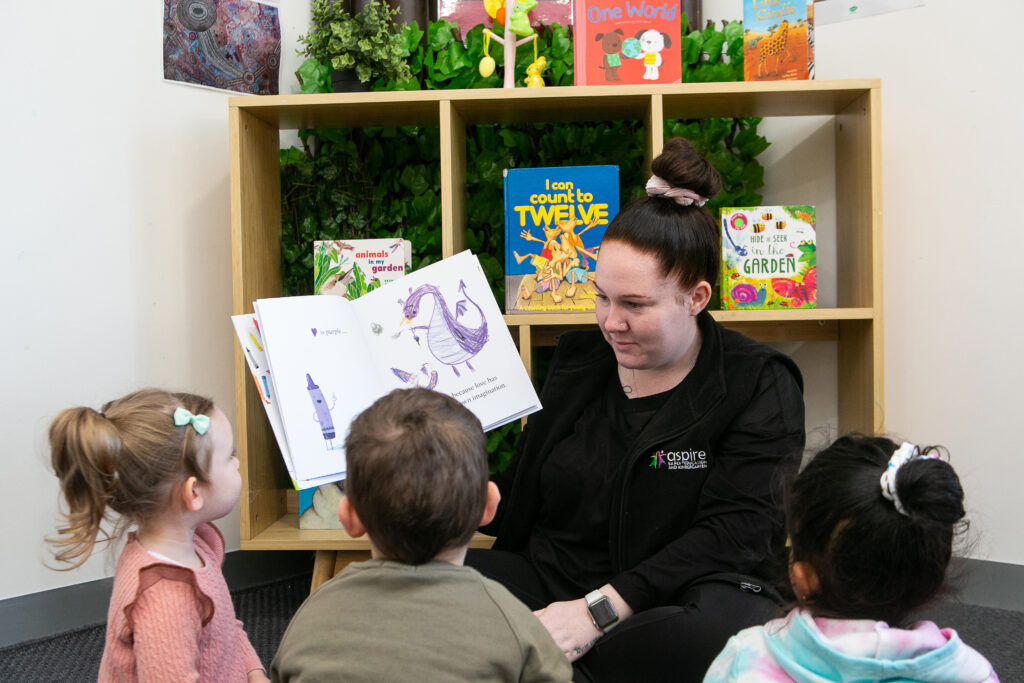
Storytelling through art is a powerful way to convey narratives, emotions and ideas visually. It’s a great medium for young children to express their creativity, engage in imaginative thinking and develop literacy skills. Some ways to tell stories through art are illustrated storybooks, comic strips, puppet shows, digital art, animated flipbooks and more.
Interactive story games are a great way for young children to engage their imagination, enhance their creativity, and help develop decision-making skills. Examples of interactive story games include digital apps or physical books where children must make decisions for characters. Or interactive e-books that trigger different animations and sounds, and make the story come to life. Other examples include interactive video games, story builders or role-playing games.
Creating a DIY personalised storybook is a fantastic way to make a unique gift or keepsake. By adding personal details to a storybook like names, favourite activities, or events, you can create a memorable experience that feels personal and special.
Recently the kinder team at Aspire Clyde North created their own personalised storybook, which featured drawings from the kinder children and some of the teachers and a storyline that went along with the drawings. It was a beautiful and personal keepsake for families that showcased the children’s work while telling a unique story.
Bedtime stories are a valuable part of many children’s bedtime routines and are a great way to help children wind down before they sleep. Reading bedtime stories to your child is also a great way to encourage their imagination and creativity, improve their listening skills, and foster a love of reading.
At Aspire Early Education, many of our centres have strong connections with their local community libraries. Sometimes the librarian will visit the centre and engage in storytelling activities with the children. Alternatively, the children have the opportunity to go on an excursion to the library where they get to explore the environment themselves.
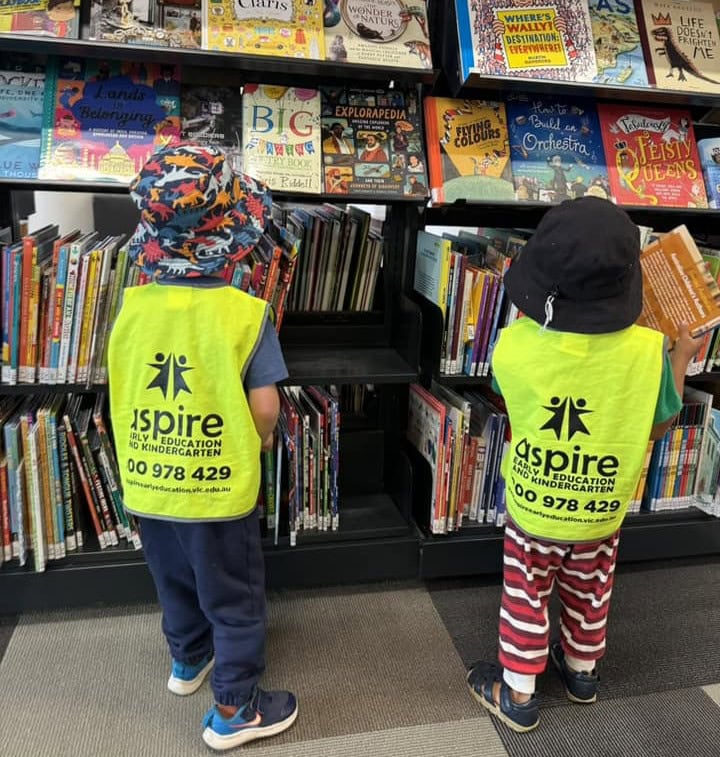
Last term, Aspire Berwick Waters went on an excursion to Casey Cardinia Library. During the visit, the children enjoyed an informative and interactive session with Tim the librarian, who guided them through the process of borrowing books from the library. Tim also led captivating reading sessions, where the children eagerly listened to stories and explored new books.
Visiting the local library can be a fun and educational experience that significantly contributes to a child’s early development.
Engaging in reading and storytelling activities is also a major part of our curriculum at Aspire. Our educators tell stories to the children through different role-playing activities where they read books and act out the characters in the book. They will dress up in costumes or use props to showcase the characters or events. Aspire Pakenham recently introduced their Mobile Bookworm Theatre which saw their team dress up in character and perform the famous fictional story “Little Red Riding Hood” to the children. This was an amazing way to tell a story in an engaging and creative way.
There are many benefits of storytelling activities that are crucial for supporting children’s language, listening, and critical thinking skills.
If you liked this resource, we also have a range of other resources that provide practical tips and strategies for parents. Check them out below: