








What is Parallel Play? Examples in Early Childhood
Posted May 18th 2026

Many parents may feel concerned when they see their child playing independently beside other children rather than directly engaging with them. However, this behaviour, which is known as parallel play, is a completely normal and important stage of early childhood development. During this time, children learn by observing others, building their confidence, and developing social awareness. Parallel play lays the foundation for future interaction, helping little ones gradually gain the skills they need to share, communicate, and play together.
So how do you define Parallel Play? Parallel play is a stage of early childhood development where children play alongside each other in the same space but not directly together. They may use similar toys or engage in similar activities, but each child is focused on their own play rather than interacting with one another.
Parallel play may look like toddlers simply playing side by side, but it appears in many different, practical ways. It can look like:
Parallel play is most common in toddlers from 18 months old to 3 years of age and is an important step in learning social skills and modelling behaviour.

Parallel play helps build social confidence by allowing children to be around others without the pressure of directly interacting or participating in group play. This creates a safe and comfortable environment where children can observe, learn, and gradually engage at their own pace. By regularly playing alongside their peers, they become used to their social environment, without feeling too overwhelmed.
This type of play also encourages observation and learning by giving children the opportunity to watch and learn from the actions, behaviours, and ideas of their peers while engaging in their own play. Children naturally observe how others solve problems, communicate, and explore activities, and then begin to imitate and experiment with these skills themselves.
Parallel play supports language development by exposing children to conversations, words, and social interactions while they play alongside others. Even when children are not directly communicating with one another, they are actively listening, observing, and learning the language used by those around them. Children can hear new words and phrases, and begin to imitate words, sounds, and expressions used by others, which is beneficial for supporting their language development.
Parallel play helps develop independence by encouraging children to make their own choices, explore ideas, and engage in play confidently while still being surrounded by others. Children learn to entertain themselves, solve problems, and navigate activities on their own, without relying on constant guidance or interaction from peers. It allows children to make their own independent decisions during play, which helps build their confidence.
Because children are not relying on guidance, interaction, or communication from others, parallel play can also help reduce the social pressure they may otherwise feel. This creates a more relaxed and comfortable experience, particularly for children who may feel shy, overwhelmed, or still developing social skills. It allows them to engage in play at their own pace without pressure to join in.
Examples of parallel play in early childhood can be seen in many everyday learning experiences, where children play alongside one another while engaging independently in similar activities. Common examples of parallel play in early childhood include:
Parallel play also occurs at home and can happen naturally during everyday routines and play experiences, especially between siblings, family members, or during playdates. Examples at home include:
Outdoor parallel play occurs when children explore and play alongside one another in shared outdoor environments. Some common examples include:
At Aspire Early Education, our educators thoughtfully create environments and experiences that support children through all stages of play, including parallel play. By understanding that children develop social confidence and communication skills at their own pace, educators provide safe, welcoming spaces where children can comfortably explore and learn alongside their peers.
Our educators support parallel play by:
Through these intentional teaching practices, educators help children develop independence, social awareness, confidence, and the skills needed for future collaborative play experiences.


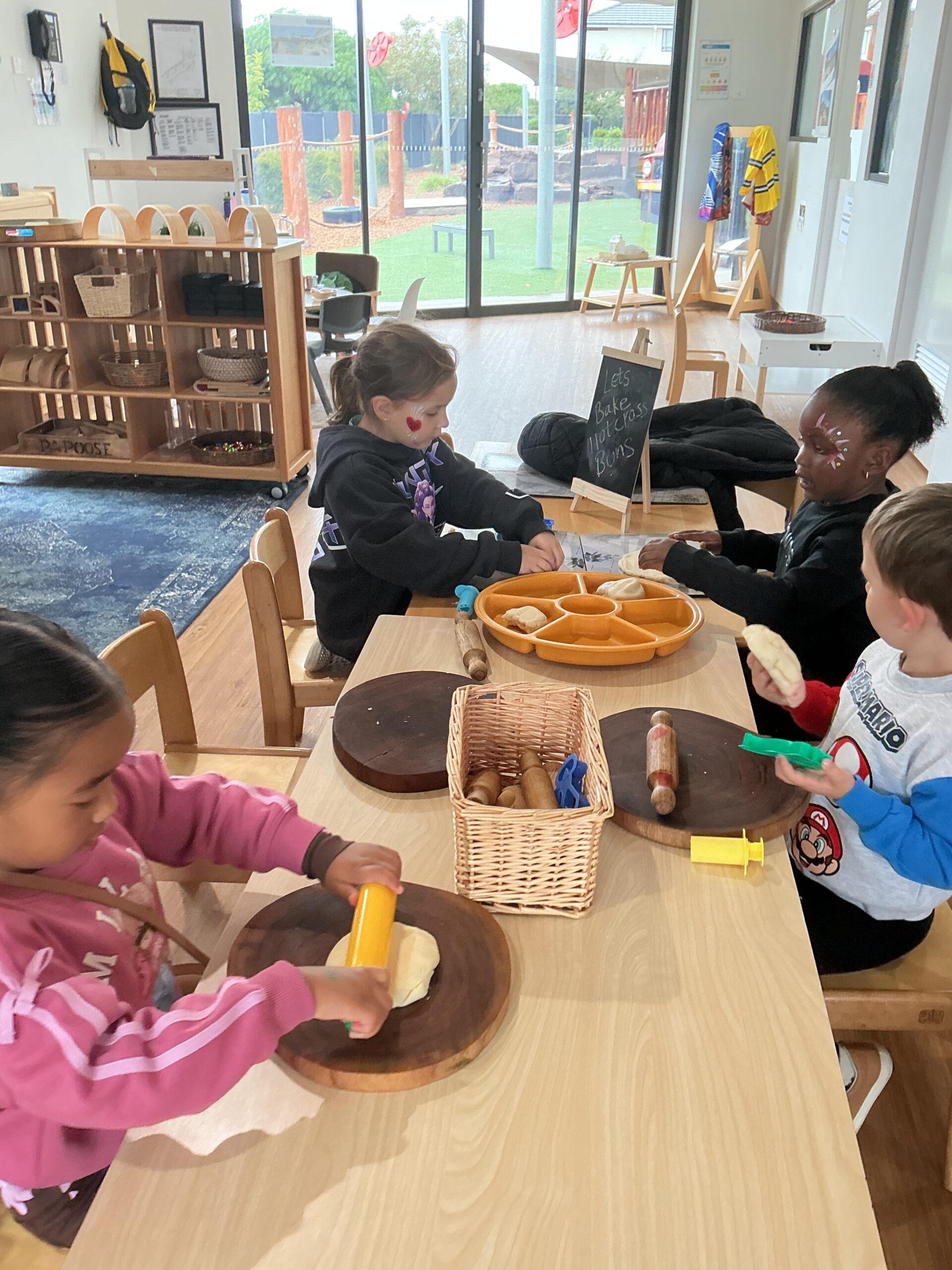
There are many activities that can encourage parallel play including:
Block Play – Block play is a fun activity where children build, stack, and arrange blocks to create different structures. These blocks can be made from wood, plastic, foam or boxes, and can foster parallel play.
Sensory Bins – These are shallow trays or containers that are filled with different materials designed to stimulate a child’s senses. Material fillers include rice, sand or water beads with tools like scoops or shovels to encourage hands-on play.
Painting and Drawing – These activities spark creativity in young children while letting them paint or draw side by side, copy each other, and share space without needing to collaborate together.
Play Dough Activities – Playdough provides a sensory experience that can be calming while also helping to develop fine motor skills. Its open-ended nature lets kids focus on their own creativity of squishing, rolling, or moulding the playdough, while learning to sit near peers.
Water Play – Water play activities might look like splashing, pouring water in a bucket, running through sprinklers, or splashing in a pool. These are all fun sensory experiences that allow for individual exploration, which is ideal for parallel play.
Pretend Play Setups – These are imaginative, role-based scenarios using props, toys and costumes where children role-play real-life situations (e.g. supermarket shopping, cooking, teachers, doctor offices). These set ups foster social interaction and encourage children to interact near each other.
Parallel play is a normal and healthy stage of early childhood development, particularly for toddlers and young children. Most children move through play stages at their own pace, so differences in social interaction are often completely normal. However, there may be times when parents wish to seek additional guidance or support.
Parents may consider speaking with a health professional or early childhood educator if a child:
It is important to remember that every child develops differently, and preferring independent play does not automatically indicate a concern. Many children simply need more time, support, or confidence to engage socially. Early childhood educators and health professionals can help families better understand a child’s development and provide reassurance or guidance when needed.
Yes, parallel play is a completely normal and important stage of development for toddlers. It commonly occurs between the ages of 2 and 3, when children begin showing interest in others but are not yet ready for fully interactive or cooperative play.
After parallel play, children typically begin engaging in associative play and then cooperative play. This is when they start interacting more with others, sharing ideas and materials, and eventually working together towards a shared goal or game.
In parallel play, children play beside each other while engaging independently in their own activities. In cooperative play, children actively interact, communicate, share roles, and work together in the same game or activity. Cooperative play involves teamwork, collaboration, and shared goals.
Yes, older children can still engage in parallel play, especially when learning a new skill, entering unfamiliar environments, or needing independent space while remaining socially connected. Parallel play can also provide comfort and support emotional regulation for children of all ages.
Parents can encourage parallel play through a number of ways. They can provide open-ended toys and activities for children to play with. Set up shared play spaces with enough toys and materials for everyone. As well as allowing children to interact at their own pace, and modelling calm and positive social interactions.
Not at all. Parallel play is a typical developmental stage and does not necessarily indicate shyness. Many children naturally prefer to observe and explore independently before becoming comfortable engaging directly with others. It is often a sign that children are developing social confidence gradually and in their own way.
Every child develops differently, and some children may move through play stages at different paces. Some may prefer solitary play for longer periods, while others move more quickly into playing with others. Providing a variety of social opportunities, play experiences, and supportive environments can help encourage social development naturally over time.
If you liked this article, we also have a range of other resources that provide education and tips for parents. Check out some of them below: