








Strategies to Enhance Language Development in Early Childhood
Posted November 20th 2024

Language development is a crucial part of a child's overall growth, especially during the first five years of their life. Learning to understand, use and enjoy language helps enhance a child's communication skills, their ability to express and understand emotions, think critically and build strong relationships.
Parents play a key role in their child’s language development by introducing new words and often teaching them their very first ones. That’s why it’s important as a parent to provide opportunities to develop language skills from an early age.
To support your child’s language development, whether they are nursery or kinder age, read some of our strategies below.
The best way to encourage your child’s language development is to talk to them often – in the car, during bathtime, at the local park and more. Start talking to them from birth, so they begin to hear words frequently. Regularly talking to your baby helps them recognise speech patterns, understand emotions through tone, and gradually start mimicking the sounds they hear. When your baby makes sounds, respond to their cues, as this will push them to vocalise more.
As your child reaches toddler age, expand on their speech by asking them more questions. Ask open-ended questions that require more than just a yes or no response. For example, instead of asking “Did you like going to the shops today with Mum/Dad? Ask, “What did you like most about going to the shops today?”. This will encourage them to provide more detail in their answers, which supports the development of their vocabulary and literacy.
Reading and sharing books with your child is a simple yet effective way to integrate language and literacy skills into their daily routines. Reading not only helps children grasp sounds and words, but also ignites their imagination and curiosity. There are many ways you can encourage children to read, such as creating a reading-friendly environment, choosing the right books that they are interested in, and making it interactive and fun.
When reading with your child, encourage curious thinking by asking questions like, “What do you think this book will be about?”. Use your finger to trace words and pictures while reading aloud with your child, to help them understand the connection between spoken words and seeing pictures. Engage your child by discussing the story as you read and asking them what they like about the story. These things will all help develop their language and literacy skills.
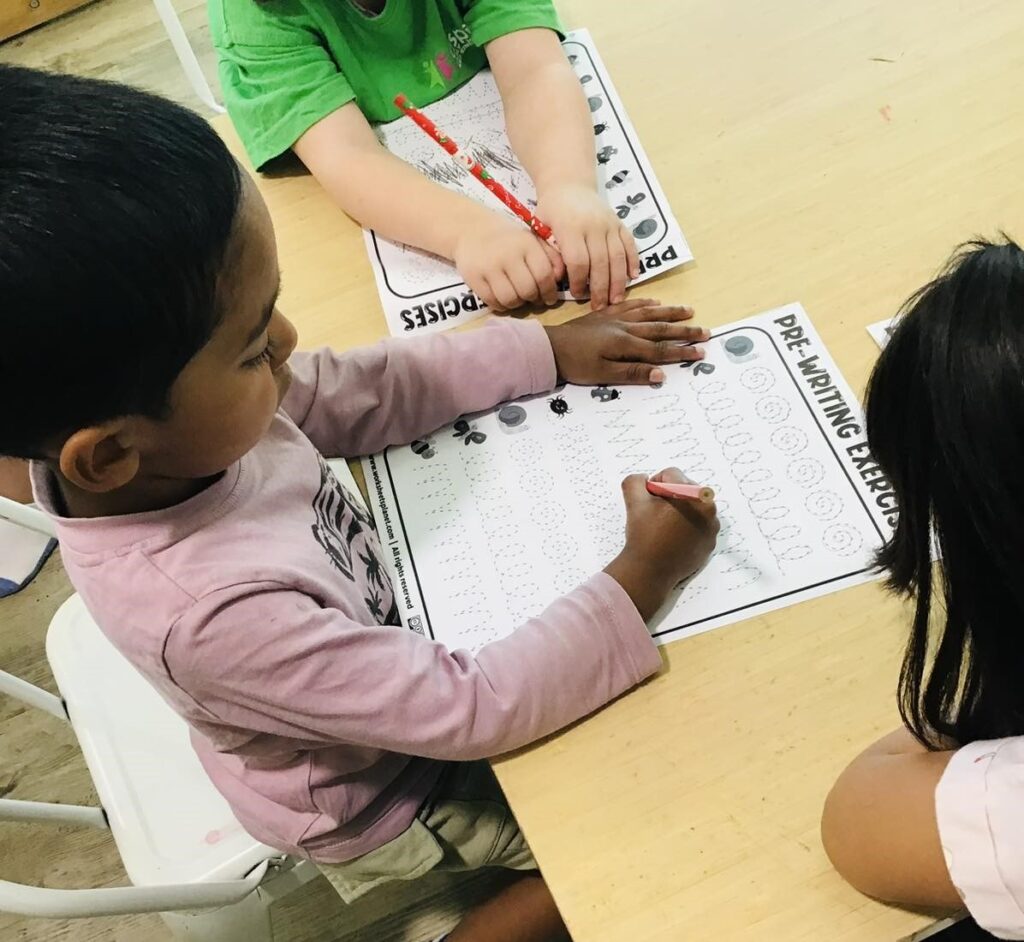
Participating in art activities can greatly enhance language development in young children. Activities such as drawing and painting ignite curiosity about letters and words, helping them recognise letter shapes, understand word meanings, and express themselves.
Encourage your child to connect their drawings with words by saying, "That’s a beautiful picture of our dog! Can you write the word 'dog'?".
Writing is a great way for children to use and experiment with new words. As they write, they learn how to break down words into individual sounds, which strengthens their understanding of how words are structured and spelt.
Imaginative or pretend play is another great way to extend your child’s language skills. Pretend play may involve a child using props or objects to represent something else and then role-playing different scenarios. Pretend play can promote language development, story creation and boost social skills by practising language in different contexts.
By implementing some of these strategies to encourage language development, you will give your child the best possible start in life.
At Aspire we also recognise the importance of developing language skills within the first few years of a child’s life.
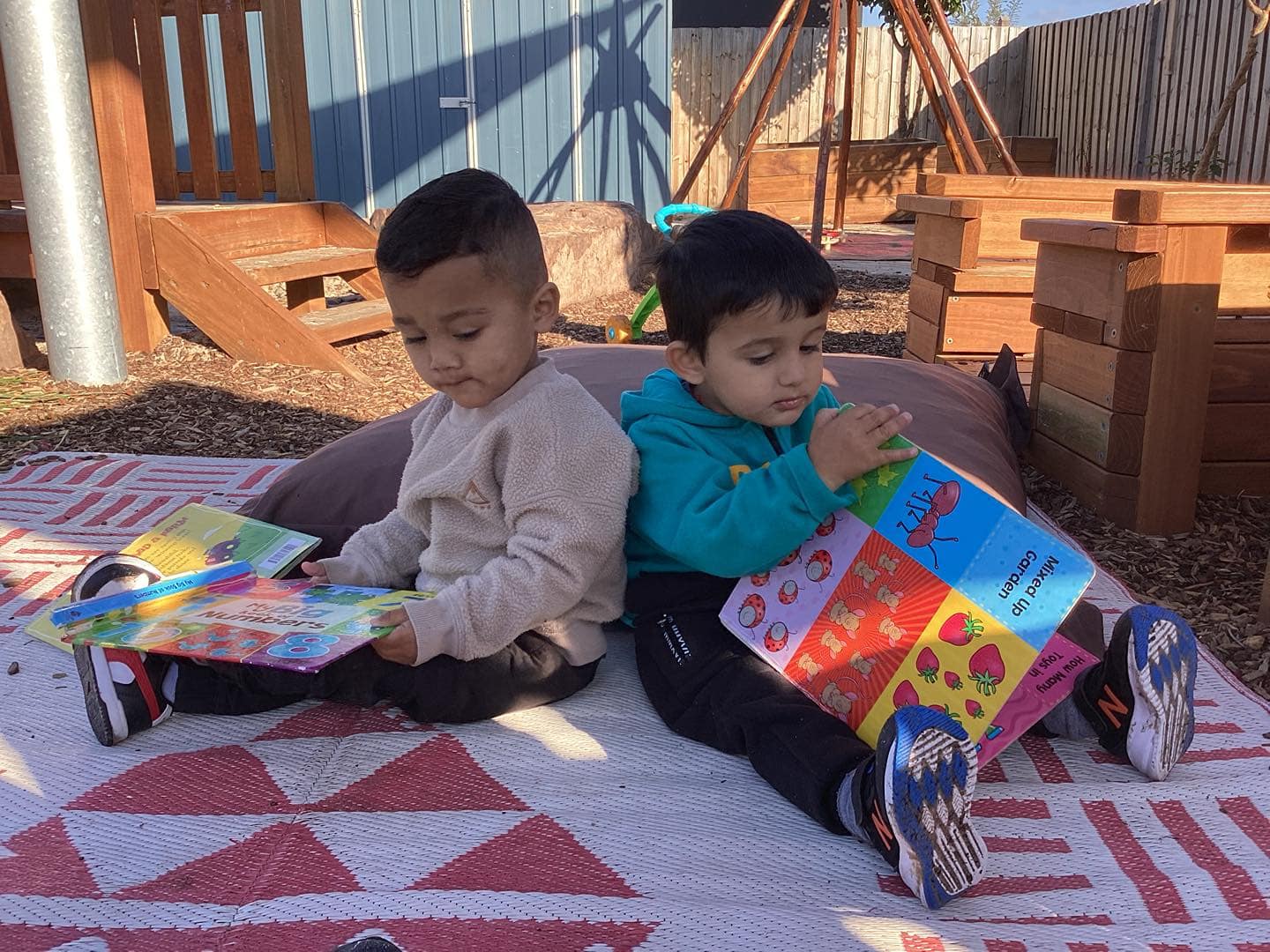
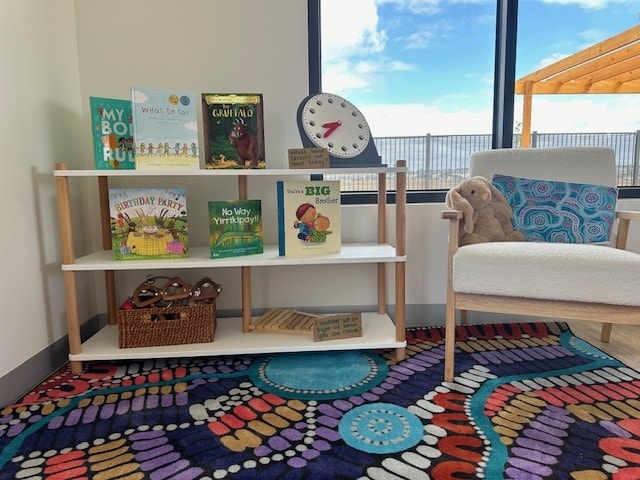
Reading for one, is an important skill that is embedded into our daily curriculum at Aspire. Aspire’s educators create inviting and comfortable spaces for children in the classrooms to encourage them to read. Setting up relaxing spaces both indoors and outside influences children to sit and read, which is a key way to build their language skills.
See some of our beautiful reading spaces at Aspire below!



In addition to reading, the children at Aspire participate in various activities that support the development of their language skills.
At Aspire Cobblebank, the kindergarten children love participating in letter recognition activities. The children use letters and then match them to the alphabet board, which helps them understand written language and words.
At Aspire Cranbourne West, the 3-year-old kinder children recently engaged in the ‘Initial Sound I Spy the letter ‘i’ activity. Children have a sheet of different images and had to recognise words that start with the letter ‘i’ and then circle those images. This helps them develop their phonemic awareness, which is the ability to recognise and manipulate individual sounds in spoken words.
To bring in the festive cheer at Aspire Riverwalk, they have been practicing their skills by writing letters to Santa. Writing letters helps children to express their thoughts into words and boosts their fine motor skills. Learning letters also helps improve vocabulary development, which is crucial for children to expand their knowledge of language, literacy, and communication.
The Kindergarten children at some our Aspire centres also participate in the Early Learning Languages Australia program, also known as ELLA. This is a play-based learning program that teaches children a new language from a professional teacher. At some of our Aspire centres, the children learn Mandarin from a qualified Mandarin teacher.
This program is an excellent opportunity to introduce language skills in an interactive and engaging way. During these sessions, the children learn different Mandarin words by looking at picture cards, reading, storytelling and more. Learning a language helps young brains to develop and grow in new ways that support their long-term learning.

To learn more about how we can support your child’s language development at Aspire, enquire now at your nearest Aspire centre!
If you liked this resource, we also have a range of others that provide practical tips and strategies for parents. Check out some of them below: